
Unusual overheating damage to electric heating element connectors
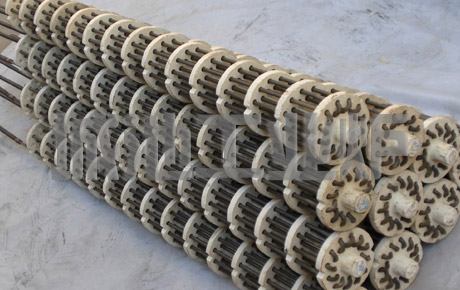
Unusual overheating damage to electric heating element connectors
lead line burned off, crimp screw and nut burned fusion corrosion and other electrical heating element of the electrical connector, abnormal overheating damage, resulting in electrical heating equipme
Abstract
- title: electric heating elements damage
- Promulgator: ChengChi
- Send date:2024-11-30 16:20:05
- Tags: overheatingdamage,resistancewire,electricheat,heatdissipation,connector,heatingelement,electricalconnector,heatingpipe,electricheatingelement,electricwire,resistance,overheating,
Keywords: electricheatingelement, overheating, connector, electricheat, resistance, electricalconnector, heatdissipation, overheatingdamage, resistancewire, electricwire, heatingpipe, heatingelement,
Unusual overheating damage to the connectors of electric heating elements
[Failure phenomenon] lead line burned off, crimp screw and nut burned fusion corrosion and other electrical heating element of the electrical connector, abnormal overheating damage, resulting in electrical heating equipment can not work properly.
[Therefore Chen cause analysis and exclusion] The main reason for this abnormal overheating damage is due to incorrect electrical installation and wiring methods. With conventional electrical equipment, components circuit joints (joints) is different from the requirements of the electric heating element of the electrical joints in addition to the requirements of the correct and reliable wiring, contact resistance is small, but also requires that it should have a certain heat dissipation characteristics and high oxidation corrosion resistance. Produce oxidation corrosion phenomenon in addition to the causes of electric heating element workplace has more serious corrosive gases and liquids (such as constant temperature water bath, salt bath) role, high temperature oxidation corrosion is the most common cause of damage to the electric heating element joints direct cause. Can take measures from the following aspects to reduce the electric heating element electrical joints at the operating temperature, improve the reliability of electric heating element joints.
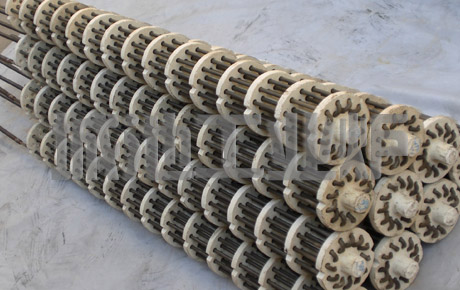
1, enhance the contact pressure between the crimp connection conductor: in a certain pressure range, the greater the pressure, the smaller the contact resistance, but if the pressure exceeds a certain limit, the size of the contact resistance will no longer be with the increase in pressure and the occurrence of significant changes. Crimped wire screw and nut fitted with the appropriate specifications of the metal spring pad group is one of the purposes of ensuring that the connection between the conductor is always maintained a moderate size, the role of constant contact pressure to reduce the conductor between the auxiliary contact electric nozzle. As the vast majority of electrically heated components lead out of the connection line itself belongs to the heat conductor, and its joints workplace temperature fluctuations and great. The deformation between the joints of the thermal expansion and cold contraction of the deformation size is not equal, so that the gap between the joints, resulting in increased contact resistance, the current through the joints of the temperature rises. Installation of spring pads between the contacts can be in the thermal expansion and contraction of the gap between the connecting conductor to compensate for the maintenance of constant contact pressure and the gap between the contact surfaces unchanged to ensure that the contact resistance between the contacts is constant.
2, reduce the resistance value of the electric heating element lead wiring: usually electric heating element is the internal electric wire (resistance wire \ radiation tube) directly out as its connection line (which is most common in general electric furnace). The heat generated at the electrical connector is partly generated by the contact resistance of the connector itself, and partly generated by the resistance of the lead-in wiring of its electric heating element. For the latter, by reducing the resistance value of the lead wires to reduce the joint heating, in the production site to make the electric heating element lead wiring terminals (such as electric stove wire terminals and electric iron electric heating piece terminals), according to the distance between the main heating area and the terminals (set up for 1), leave a length greater than 2L or 3L of the electric wire, and straighten it, and then its 2 strands or 3 strands of parallel stranded, so that the As a whole, according to the actual situation and then joint bending or crimping, so that due to the increase in the contact area, the electric heating element lead wire part of the resistance value will fall to the original value of 1 / 3 ~ 1 / 2, the corresponding heat will fall to the original value of 1 / 3 ~ 1 / 2. If the diameter of the electric wire is very small, back and forth to bend the texture connected to the electric heater lead wire part of the number of strands can be increased accordingly.
3, enhance the electric heating element electrical joints in the cooling and ventilation effect: for high-power equipment, due to the number of electric heating elements and the corresponding electrical connection points are more, the connection point contact resistance and lead resistance generated by the heat is also more, if the heat will not be emitted in a timely manner, it will be in the vicinity of the electrical contact points and leads around the localized overheating, which in turn causes overheating and high-temperature corrosion of electric heating elements and the contact points and rust. Damage. Therefore, for high-power electric heating equipment wiring, the main power line and the connection between the heating element branch line generally do not use direct crimping or stranded method, and should be equipped with a piece of thermal conductivity and heat dissipation effect of the intermediate transition connection terminals. This terminal can be a larger surface area of the copper row, can also be stainless steel or galvanized (drilling) flat iron. Avoid heat “gathering” the formation of high-temperature zone, thus overcoming the phenomenon of local overheating.
More Unusual overheating damage to electric heating element connectors: en.chengchi.net/view-252.html


