
Composition and development history of industrial furnace
Composition and development history of industrial furnace
The main components of industrial furnace are: industrial furnace masonry, industrial furnace exhaust system, industrial furnace preheater and industrial furnace combustion device. There are various t
Abstract
- title: industrial furnace composition history
- Promulgator: ChengChi
- Send date:2024-11-30 16:56:37
- Tags: crucible furnace,heating furnace,normalizing furnace,vacuum furnace,drying furnace,industrial electric furnace,melting furnace,gas furnace,Electric furnace,industrial furnace,resistance furnace,Quenching furnace,coal furnace,furnace,heat treatment,annealing furnace,tempering furnace,
Keywords: furnace, industrial furnace, heat treatment, melting furnace, vacuum furnace, resistance furnace, electric furnace, crucible furnace, drying furnace, heating furnace, annealing furnace, coal furnace, gas furnace, industrial electric furnace, normalizing furnace, quenching furnace, tempering furnace,
Composition and development history of industrial furnace
The main components of industrial furnace are: industrial furnace masonry, industrial furnace exhaust system, industrial furnace preheater and industrial furnace combustion device. There are various types of industrial furnace applied in the machinery industry, in the foundry, there are melting metal cupola, induction furnace, resistance furnace, electric arc furnace, vacuum furnace, flat furnace, crucible furnace, etc.; there are baking sand sand drying furnace, ferroalloy drying furnace and casting annealing furnace, etc.; in the forging workshop, there are a variety of forging or billet pre-forging heating furnace, and forging after the elimination of stress of the heat-treating furnace; in the metal heat treatment workshop, there are In the metal heat treatment workshop, there are various annealing, normalizing, quenching and tempering heat treatment furnace to improve the mechanical properties of the workpiece; in the welding shop, there are welding pre-welding furnace and post-welding tempering furnace; in the powder metallurgy workshop there are sintered metal heating furnace and so on.
Industrial furnace is in industrial production, the use of fuel combustion or electrical energy into heat, the material or workpiece heating thermal equipment. Broadly speaking, the boiler is also a kind of industrial furnace, but customarily people do not include it in the scope of industrial furnace.
Industrial furnace is also widely used in other industries, such as metallurgical industry, metal melting furnace, ore sintering furnace and coking furnace; petroleum industry, distillation furnace and cracking furnace; gas industry, furnace; silicate industry, cement kiln and glass melting, glass annealing furnace; food industry, such as baking ovens.
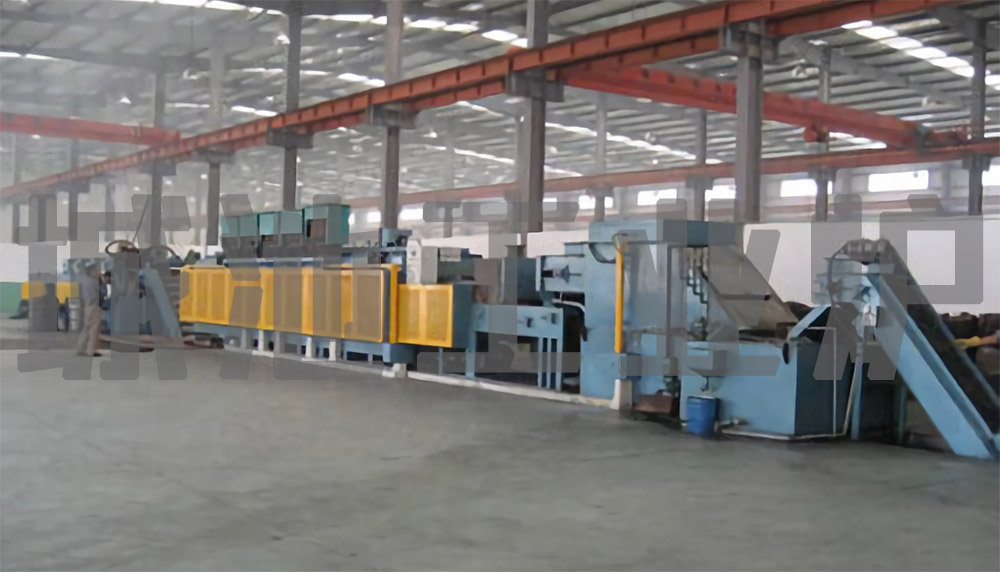
The creation and development of industrial furnace plays a very important role in the progress of mankind. China in the Shang Dynasty appeared more perfect copper refining furnace, the furnace temperature reached 1200 ℃, the inner diameter of the furnace up to 0.8 meters. In the Spring and Autumn and Warring States period, people in the molten copper furnace on the basis of further mastered the technology to improve the temperature of the furnace, so as to produce cast iron.
In 1794, the world appeared in the melting of cast iron straight cupola. Later in 1864, the Frenchman Martin used the principle of the regenerative furnace of the Englishman Siemens to build the first steelmaking flat furnace heated by gas fuel. He utilized a regenerative chamber to preheat the air and gas at a high temperature, thus ensuring a temperature of over 1600 C. Around 1900, the supply of electricity gradually became sufficient, and a variety of resistance furnaces, electric arc furnaces and core induction furnaces began to be used.
In the 1950s, the coreless induction furnace was rapidly developed. Then came the electron beam furnace, which utilizes electron beams to impinge on solid fuels, enabling enhanced surface heating and melting of materials with high melting points.
The earliest furnace used for forging heating was the hand forging furnace, whose workspace was a concave trough filled with coal, air for combustion was supplied from the lower part of the trough, and the workpiece was buried in the coal for heating. The thermal efficiency of this furnace is very low, the quality of heating is not good, and can only heat small workpieces, later developed into a semi-closed or fully closed chamber with refractory bricks chamber furnace, you can use coal, gas or oil as a fuel, can also be used as a heat source of electricity, the workpiece is placed in the chamber heating.
In order to facilitate the heating of large workpieces, and the emergence of suitable for heating ingots and large billets of the trolley furnace, in order to heat the long rod also appeared in the pit-type furnace. 20 years after the 1920s and the emergence of the furnace to improve productivity and improve labor conditions of a variety of mechanized, automated furnace type.
Industrial furnace fuel with the development of fuel resources and fuel conversion technology, and by the use of lump coal, coke, pulverized coal and other solid fuels gradually changed to furnace gas, city gas, natural gas, diesel, fuel oil and other gases and liquids, and developed with the fuel used in a variety of combustion devices.
More Composition and development history of industrial furnace: en.chengchi.net/view-256.html
Relevant Composition and development history of industrial furnace
-
Composition and development hi...
-
How to make the blackening fil...
-

Heating furnace burner flame r...
-

Maintenance of cast iron cruci...
-

Nitriding furnace mold nitridi...
-

Sintering Furnace Process
-

Distribution of resistance fur...
-

Nitriding Furnace Operation Pr...
-
Vacuum Tempering Furnace Tempe...
-

Methods and principles for the...
-

Quenching oil tank cleaning an...
-
Advantages of vacuum furnace
-
Industrial Furnaces vs. Cold P...
-

Advantages of fast hydraulic a...
-

Rapid hydraulic automatic quen...
-

Selection of quench furnace ty...
-

Fan shaft use and maintenance
-
Calculation of water cooling s...
-

Electric furnace
-

Advantages of the inverted tro...
-
Advantages of fast hydraulic a...
-

Characteristics of heat treatm...
-

Industrial furnace masonry
-

What precautions oven?
-

Annealing furnace Features
-

Trolley furnace Precautions
-

tempering furnace Precautions ...
