
Automatic quenching oil tank quenching process and procedure
Automatic quenching oil tank quenching process and procedure
Automatic quenching oil quenching process will be heated to an appropriate temperature of the metal workpiece and maintain a period of time, and then
Abstract
- title: quenching process and procedure
- Promulgator: ChengChi
- Send date:2024-09-05 15:11:00
- Tags: quench oil tank,
Keywords: quench oil tank, quench tank, oil tank, automatic quench oil tank, process, temperature, hardness, metal processing, cooling, quenching medium,
Automatic quenching oil tank quenching process and procedure
Automatic quenching oil quenching process will be heated to an appropriate temperature of the metal workpiece and maintain a period of time, and then immediately immersed in the quenching medium for rapid cooling of the metal heat treatment process. Commonly used quenching and cooling medium are brine, water, mineral oil, air and so on. Quenching can improve the hardness and wear resistance of metal workpiece, and therefore widely used in a variety of work, molds, gauges, and the requirement of surface wear parts (such as gears, rolls, carburized parts, etc.). Through the quenching and tempering at different temperatures with, can greatly improve the strength, toughness and fatigue strength of the metal, and can obtain the performance of these properties with each other (comprehensive mechanical properties) to meet the different requirements of use. In addition, quenching can also make some special properties of steel to obtain certain physicochemical properties, such as quenching the permanent magnet steel to enhance its ferromagnetism, stainless steel to improve its corrosion resistance. Quenching process is mainly used for steel parts. Commonly used steel in the heating to the critical temperature above, the original organization at room temperature will be all or most of the transformation into austenite. Subsequently, the steel is immersed in water or oil and rapidly cooled, the austenite is transformed into martensite. Compared with other organizations in steel, martensite is the hardest. The purpose of steel quenching is to transform all or most of its organization into martensite, to obtain a high hardness, and then to temper it at the appropriate temperature so that the workpiece has the desired properties. Rapid cooling during quenching will cause internal stresses within the workpiece, when it is large enough to a certain extent when the workpiece will be twisted and deformed or even cracked. For this reason, it is necessary to choose the appropriate cooling method. According to the cooling method, quenching process is divided into single liquid quenching, dual media quenching, martensite graded quenching and bainite isothermal quenching 4 categories.

Automatic quenching oil tank quenching effect of important factors, rapid automatic quenching oil tank quenching workpiece hardness requirements and testing methods:
Automatic quenching oil tank quenching workpiece hardness affects the effect of quenching. Fast automatic quenching oil tank quenching workpiece generally use Rockwell hardness tester, test HRC hardness. Quenched thin hard steel plate and surface quenching workpiece can be tested for HRA hardness. Quenched steel plates with a thickness of less than 0.8 mm, shallow surface quenched workpieces and quenched steel rods with a diameter of less than 5 mm can be changed to surface Rockwell hardness testers to test HRN hardness.
Related quench tank products:

Multifunctional automatic quen...

side pull lifting quenching ta...

Multifunctional mobile high an...

belt lifting continuous automa...

Quenching brine tank quenching...

fully automatic small mobile q...

quenching cooling tank

Experimental mobile quenching ...

Experimental forklift type rap...

Automatic hydraulic water cool...

Double liquid quenching tank

Box furnace quenching groove i...

Mechanical lifting swing test ...

Portable Agitated Quench Tanks

Mini mobile portable agitated ...

OEM for quenching tank process...

Reciprocating Swing Quenching ...

Heat treatment test quenching ...

Experimental mobile small auto...
fast automatic hydraulic oil t...

Automatic quenching tank

Liquid collection tank

Small intelligent experimental...
-

Dual station integrated multif...

More Automatic quenching oil tank quenching process and procedure: en.chengchi.net/view-230.html
Relevant Automatic quenching oil tank quenching process and procedure
-
Advantages of fast hydraulic a...
-

Rapid hydraulic automatic quen...
-

Selection of quench furnace ty...
-
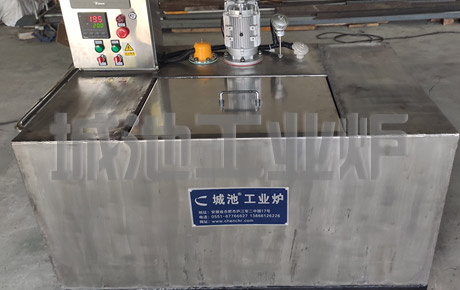
Automatic quenching oil tank q...
-

Application of Quenching Proce...
-
Analysis of reasons for insuff...
-

Quenching and cooling equipmen...
-
The role and requirements of q...
-

Safety technology of heat trea...
-

DM muffle tank mesh belt furn...
-

Shutdown of continuous mesh be...
-

Maintenance and maintenance of...
-

Quenching defects,causes and p...
-

Technical requirements for hea...
-
Advantages of fast hydraulic a...
-
Maintenance and maintenance of...
-

Heat treatment and harm FAQ
-

Spheroidizing annealing scope
-
What is the quench oil tank ?
